Social Media Measurement: The Practical Guide for Marketers 2025
Unlock the full potential of your social media strategy with our 2025 guide to effective measurement and analytics, ensuring every effort drives real business results.
February 3, 2025
![Featured image for Social Media Measurement: The Practical Guide for Marketers [2025]](/_next/image?url=https%3A%2F%2Fimages.ctfassets.net%2Fjiz1qmszsogv%2Fblog-featured-asset-634d8c38-1226bda0%2F5c0c216ea7efa17785a8042407ffb505%2Ffeatured-634d8c38.webp&w=3840&q=75)
Businesses invest thousands in social media marketing and chase likes, shares, and comments. Yet they often fail to prove actual business value.
Tracking social media performance solves this challenge by helping you understand what works, optimize your strategy, and show stakeholders clear results.
This guide explores the key aspects of social media measurement in 2025—from selecting the right metrics and tools to making sense of your data.
Want to know how to turn those social insights into social success? Check out our latest customer success story and see how one NBA team is scoring fans through data-driven social strategy.
Download the NBA team success storyWhat is social media measurement?
Social media measurement is the process of tracking and analyzing your social media performance using specialized social media analytics tools.
The best part?
It helps you turn social media metrics like followers, shares, and impressions, into actionable business insights.
For example, an e-commerce brand selling shoes could track:
How many people land on their product pages from Instagram posts
Which type of social content drives the most purchases
Total revenue generated from social media traffic
Return on ad spend for social campaigns
Online sentiment around their content and brand
This way, they would know exactly how social media contributes to bigger marketing goals and get the buy-in from various stakeholders.
Why do you need to measure social media performance?
It’s essential to keep a close eye on your social media numbers because it helps you understand if your efforts drive real business results.
Let's explore the key benefits of tracking social media performance.
Prove ROI and budget impact
Most businesses want to know if their social media investment pays off. But very few do it right.
Analyzing engagement metrics alone doesn’t tell if your social media efforts contribute to bigger marketing objectives like brand awareness and sales.
In fact, 68% of marketers report worrying about proving ROI from their social efforts, as it directly affects their budgets and recognition in the company.
By tracking social media performance as a whole, you can understand:
Total reach and engagement from your social content
Revenue generated from social media traffic and campaigns
Cost per lead or customer acquisition from each social media platform
Return on ad spend for paid social campaigns
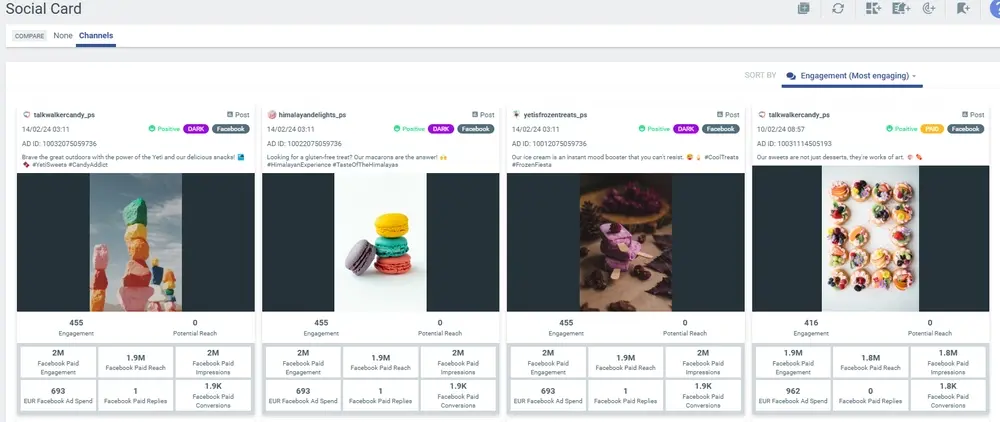
For example, you can find out the cumulative social media ROI with direct conversions and other metrics if you use specialized social media measurement tools like
Understand your audience better
Social media data provides important insights about audience preferences and behavior.
Proper measurement helps capture and analyze these insights to inform your marketing and product decisions.
By analyzing social media metrics, you learn:
What content formats and topics drive the most engagement
When your audience is most active and likely to interact
Which products or features generate the most interest
What problems and questions appear in comments
For example, you can monitor social media to see how people react to your new product features. Tracking comments, shares, and sentiment around posts promoting these features shows whether they excite them and what improvements they want to see.
Choose effective social media platforms and tactics
Every social media platform functions differently, and each can impact your business in unique ways.
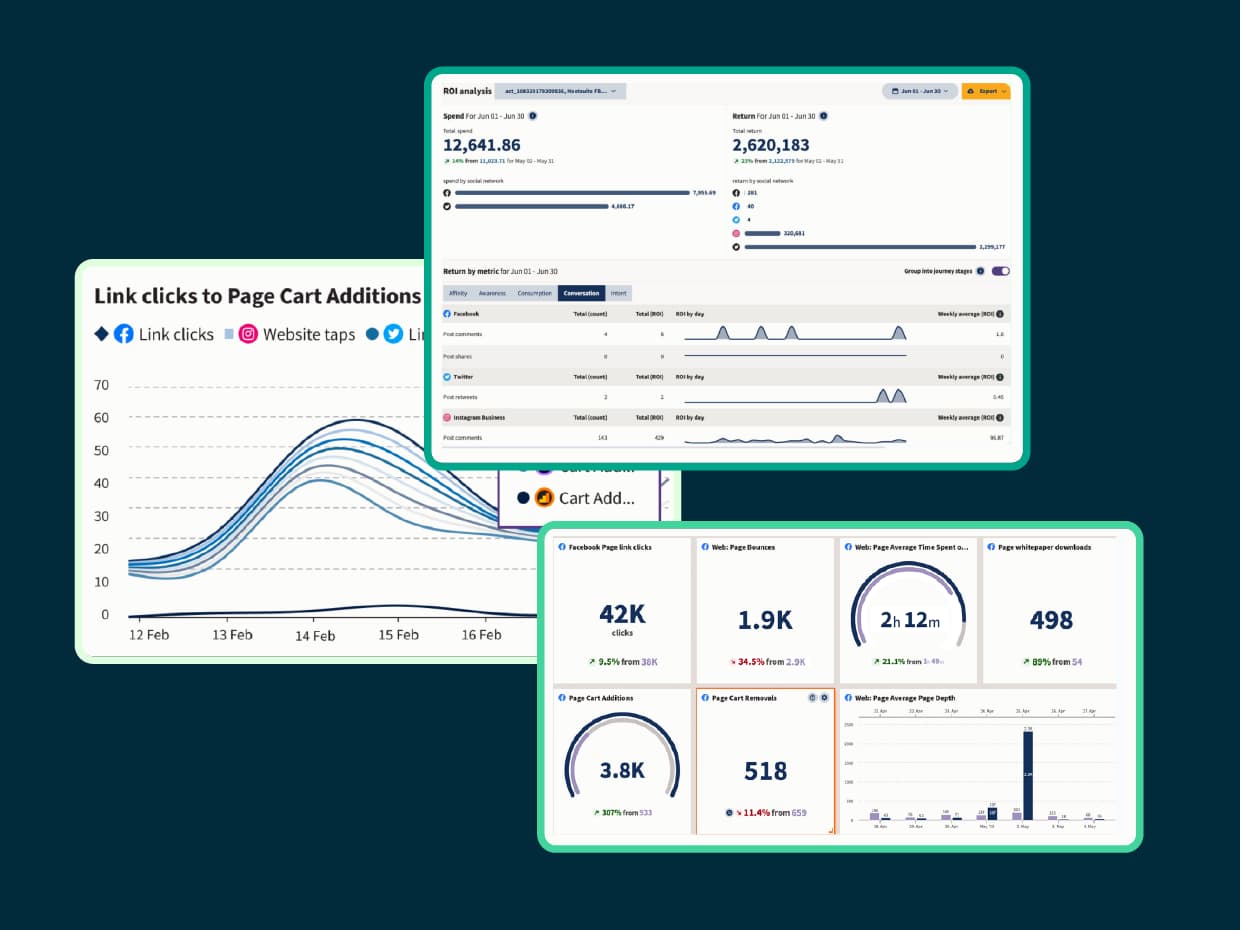
By measuring cross-platform performance, you can reveal which networks and content types actually contribute to your business goals. Here’s what you can achieve:
See which social media networks bring quality website traffic and conversions
Identify content types that resonate on each platform
Understand where your target audience prefers to hang out
Track how platform changes affect performance
This data helps allocate resources effectively—from choosing where to invest your ad budget to deciding which platforms need more content creation effort.
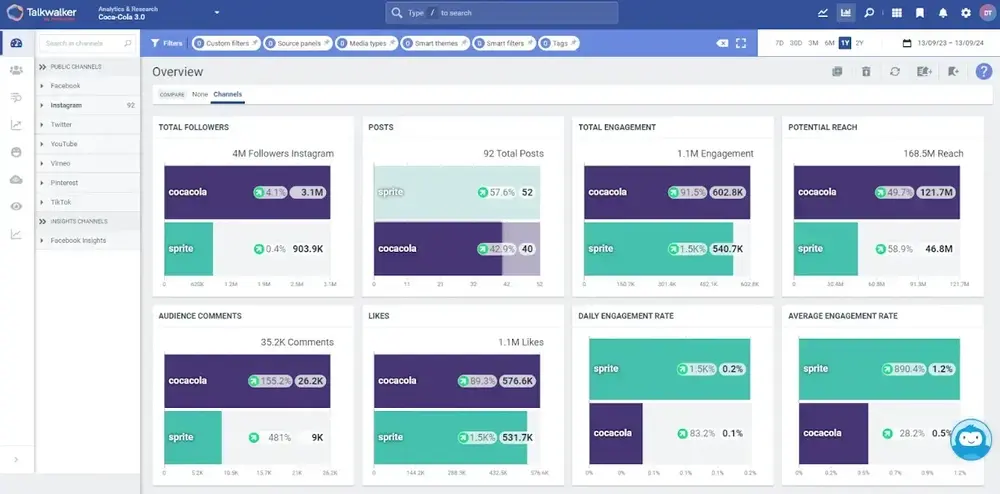
Here’s what that looks like in a social media measurement tool like Talkwalker:
Track competitive social media landscape
Social media also offers unique insights into your competitors’ strategies and market trends.
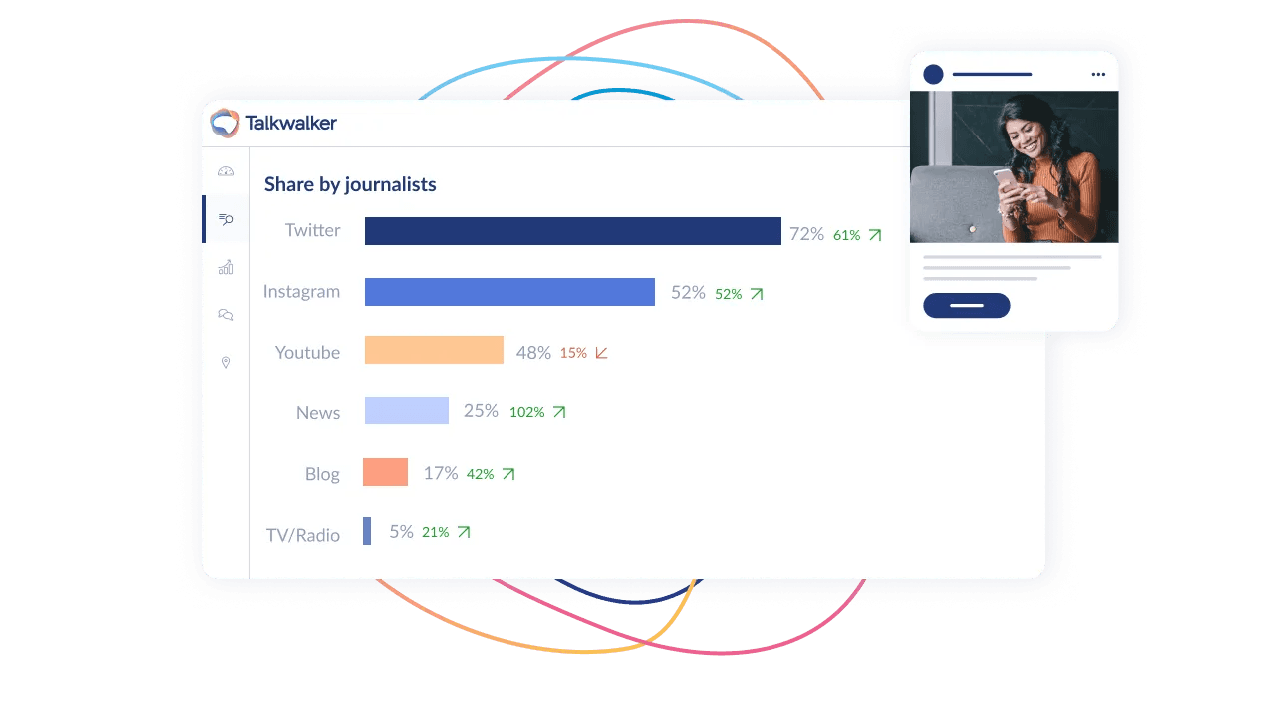
Through social media measurement, you can monitor competitor content performance and find opportunities for your own social media efforts.
By analyzing competitor activity data, you can spot:
Which content types perform well in their industry
Gaps in competitor social media strategies
Emerging trends and audience interests
Shifts in competitor focus and messaging
For example, tools like Talkwalker help you to learn which of your competitors do a good job with audience growth and engagement—and look for clues to inform your own strategy.
How to implement social media measurement effectively
Setting up proper social media tracking takes strategic planning and the right tools. You’ll need to:
List clear business objectives and matching KPIs
Create a measurement framework across content, campaigns, and channels
Set up proper tracking and analytics tools
Build a regular reporting and optimization process
Each step helps turn your social media data into actionable insights. Let's dig into how to implement them.
1. Define clear measurement objectives
Every successful social media marketing strategy needs clear goals. Without them, you'll waste time tracking metrics that don't matter for your business.
Start by listing your high-level business goals and connect them to specific social media metrics. For example:
Drive sales → Track conversion rates, average order value, and revenue from each social platform
Build brand awareness → Measure reach, impressions, share of voice, and brand sentiment trend
Increase community engagement → Monitor engagement rate, comment quality, and active community members
Generate leads → Track lead volume, cost per lead, and lead quality by social media channel
Boost customer loyalty → Measure repeat purchase rate and customer satisfaction scores on social media
Remember, you need to set realistic and achievable targets for each metric.
For instance, instead of aiming for "more sales from social," set a specific goal like "increase social media conversions into purchases by 25% in Q2 2025."
2. Set up your tracking framework
Once you've defined your goals and KPIs, you need a clear system for tracking them. Social media measurement usually works on three key levels:
Content level: Tracks how your individual posts perform and helps you understand which content types, formats and topics resonate with your audience.
Campaign level: Measures results of specific marketing initiatives with clear start and end dates.
Overall performance: Monitors long-term social media success through consistent metrics like social media ROI.
For example, you can track views on individual Instagram reels to see which formats and topics gain the most traction.

You can also analyze how your social media ad campaigns perform and monitor CTRs (Click-Through Rates), CAC (Customer Acquisition Cost), and related metrics.

Source: Lia Awards
But to truly understand the impact of these activities, you'll need to connect metrics across all three levels and analyze how they contribute to your business goals.
This requires proper tagging and tracking setup. It means having:
Consistent naming for campaigns across platforms
Tracking parameters for each link
Unified dashboards showing end-to-end analytics
The good news?
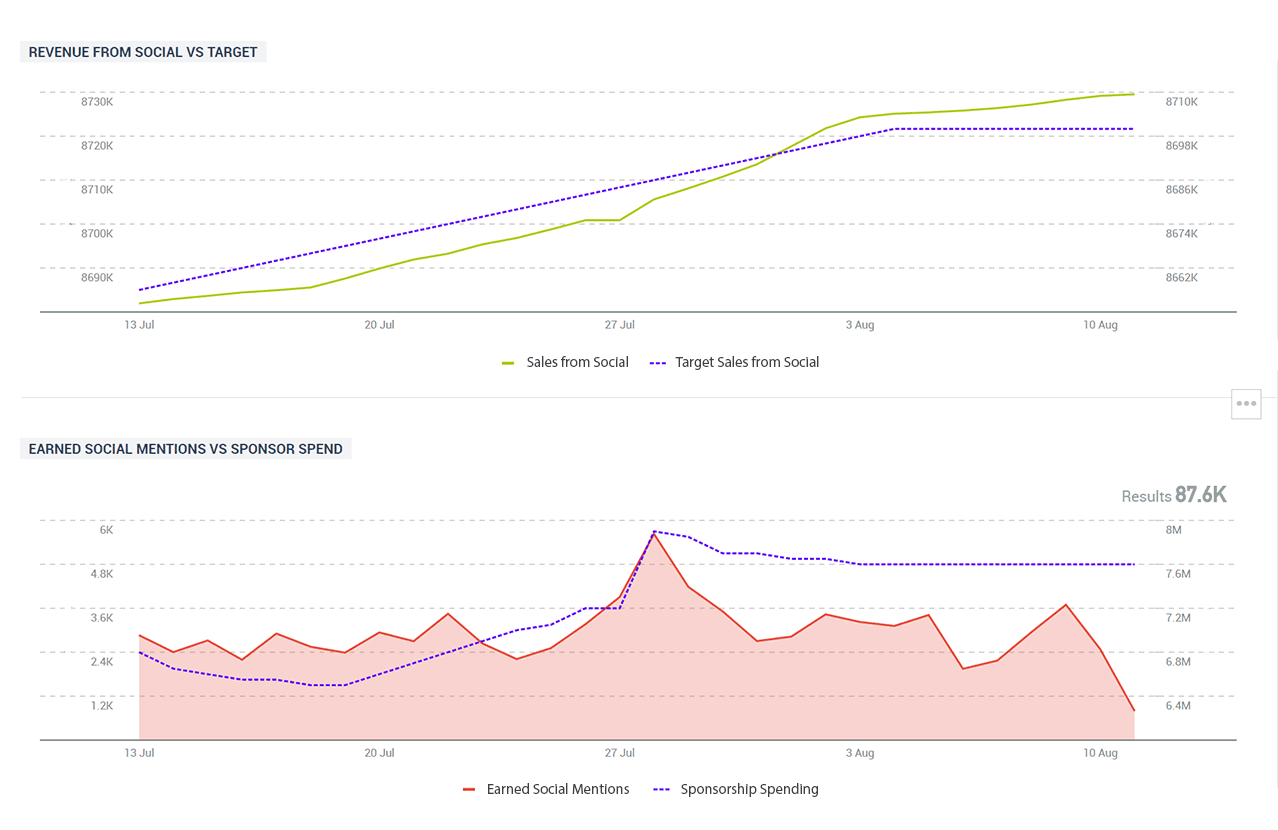
Social media analytics tools like Talkwalker can automatically connect various data points to show the full picture—from individual post performance to overall impact.
__CONTENTFUL_MEDIA_7__
3. Select social media measurement tools that match your needs
Each social media platform offers basic analytics—like Instagram's post insights and LinkedIn's detailed demographic data. But these native tools only show part of the picture and don't connect data into a unified dashboard.
To measure effectively across channels, you'll need:
Comprehensive analytics platforms: Tools that combine website traffic tracking, engagement metrics, and business data to show the full customer journey. They help track everything from hashtag performance to audience sentiment.
Social listening solutions: Tools that analyze relevant conversations about your brand and industry. They track brand mentions, measure sentiment, and identify emerging trends in your niche.
Management and automation tools: Platforms that help schedule content, manage social media campaigns, and generate automated analytics reports.
The good news is that you can get all these features in one place.
For example, Hootsuite combines its social media management features with Talkwalker’s analytics and social listening tools.
When choosing analytics software, make sure it:
Covers your target channels
Fits your budget and team size
Integrates with other marketing tools you use
Is user-friendly and scalable
4. Map out a consistent measurement process
After setting up your tracking framework and selecting tools, establish clear processes for collecting and analyzing social media data.
This means designing standard operating procedures (SOPs) for your team.
You can start by creating a simple document that outlines the key steps and assigns responsible parties for each task. This can be supplemented with video recordings, regular meetings, Slack channels, internal knowledge base articles, and more.
Analyze your current methods for tracking social media data to identify what works well and what causes bottlenecks for the team.
Then, design SOPs that tackle these challenges. Include the following information:
Which data to collect from each social platform: e.g., video views for Instagram and TikTok, traffic and form submissions from LinkedIn, etc.
How to access analytics correctly: e.g., step-by-step login process for each tool, how to export data in the right format, how to handle discrepancies in cross-platform data, etc.
When to check different metrics: e.g., checking post performance and engaging daily, reviewing conversions at the end of each campaign, analyzing audience demographics monthly, etc.
Who handles each task: e.g., community managers track daily engagement rates, social media lead reviews weekly performance, etc.
Required permissions and backup access: e.g., list of team members with admin rights, backup contacts for each platform, the emergency access protocol, etc.
Once you have these procedures documented, create templates for both data collection and reports. This ensures everyone measures and reports metrics the same way, making data comparable over time.
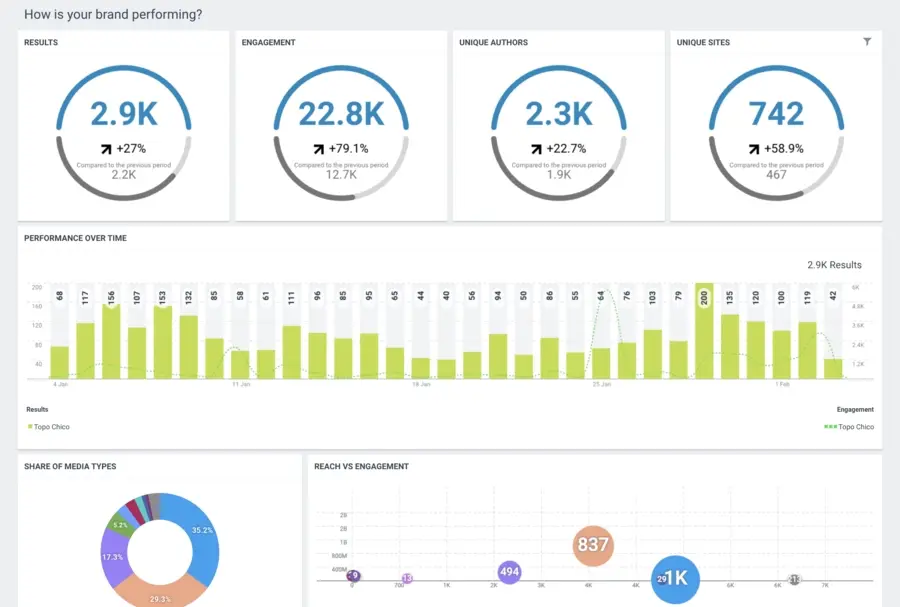
You can also use pre-designed report templates available in your social media tracking tool and customize them to your needs.
5. Monitor and troubleshoot your data
It's important to regularly check your social media data. But you also need to actively manage its quality.
This means checking for potential data discrepancies, fixing tracking problems, and adjusting your process as needed. Start with weekly data checks to:
Compare metrics across platforms and tools to spot discrepancies
Look for unusual spikes or drops in engagement metrics
Make sure that tracking codes still work properly
Verify that team members follow measurement SOPs
When you spot issues, investigate immediately.
For instance, a sudden drop in website traffic from social might mean broken tracking parameters. Similarly, big differences in engagement rates between tools could signal incorrect data pulling.
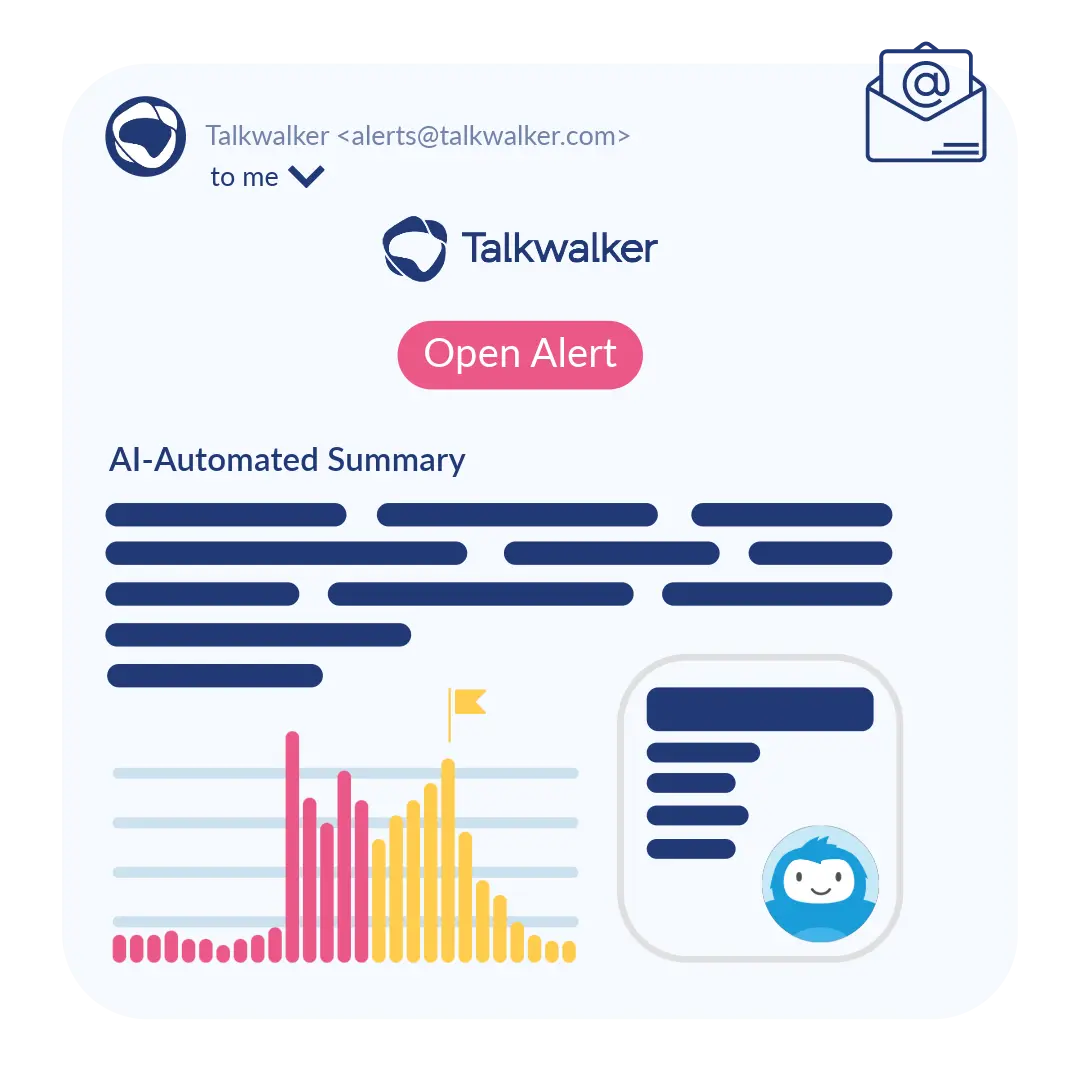
To manage this effectively, use real-time alerts to get instant notifications about important changes in your data and social media presence. Here's what it looks like in Talkwalker:
Most importantly, keep your measurement process flexible. Social media platforms frequently change their algorithms and introduce new features—and you need to adjust accordingly.
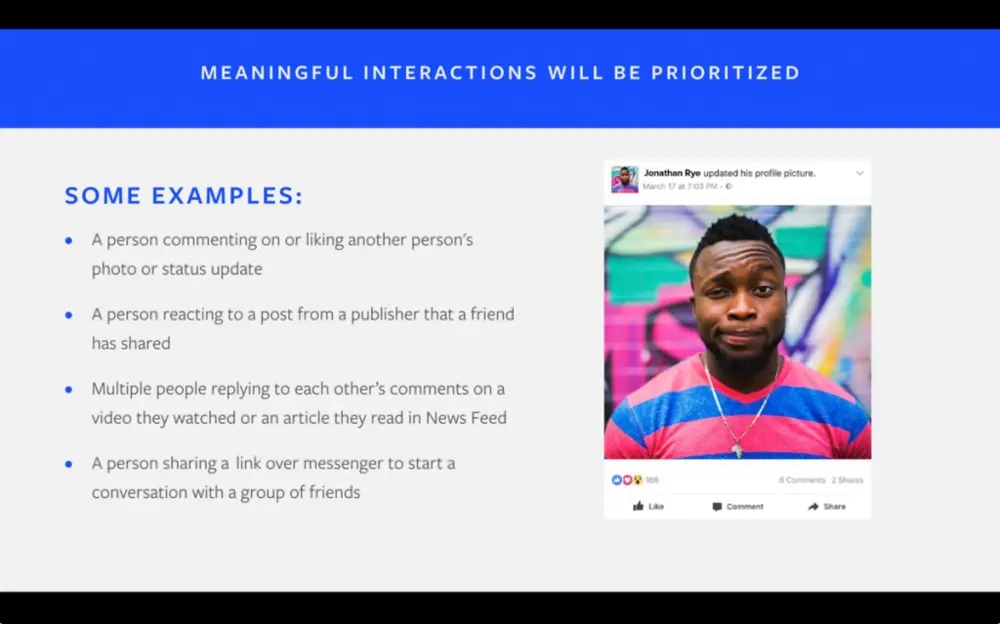
For example, when Facebook introduced its "Meaningful Interactions" update in 2018, it significantly reduced organic reach for business pages and prioritized content with active engagement.
Source: The Digiterati
This forced marketers to completely revise their measurement approach—from tracking basic reach metrics to focusing on meaningful interactions like comments and shares.
6. Analyze and improve your social media performance
Now that you're tracking the right metrics and analyzing the right data, it's time to turn these insights into better social media results.
Many marketers simply sit on data, hoping to see positive changes and get a dopamine boost.
Instead, you need to look for patterns, bottlenecks, and useful lessons. Review your content performance regularly to identify:
Top-performing messages and creatives
Best times to post for each social platform
Most valuable content types for your goals
Opportunities to improve conversion rates
Gaps in your content strategy
Then, act on these insights.
For example, if live videos drive higher engagement rates, schedule them regularly.
If certain topics resonate more with your target audience, adjust your content calendar accordingly.
If Instagram Stories bring more sales, adapt your content to include product tags, "swipe up" links, and clear calls-to-action. Just like this clothing brand does it:

You get the idea!
The 4 best social media measurement tools of 2025
Each social platform, such as Instagram or LinkedIn, provides basic analytics. But getting a complete view of your performance requires specialized social media measurement tools.
When choosing software for your business, make sure it:
Provides real-time data access
Shows clear ROI analytics
Works well with your existing tools
Offers customizable reporting
Here are four platforms that deliver on these needs.
Talkwalker
Best for: Advanced brand monitoring and social media listening paired with social media analytics
Talkwalker is a social listening platform that monitors conversations across 30+ social networks and 150+ million websites.
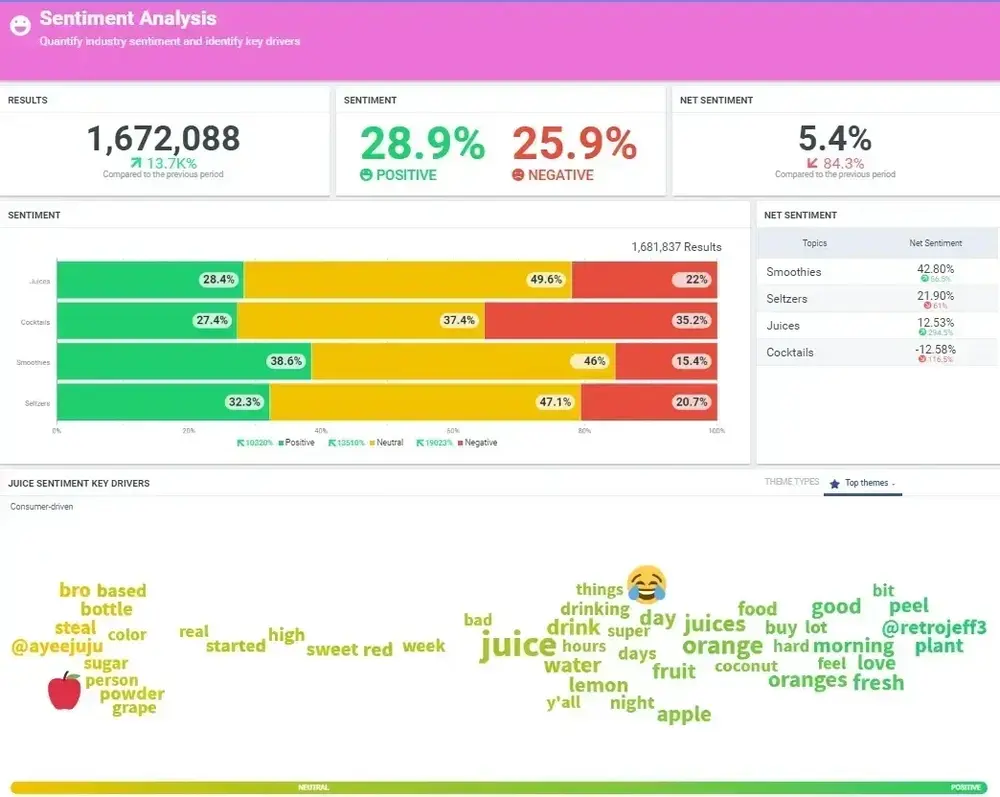
The tool tracks everything from basic metrics like mentions and shares to deeper insights about brand perception and market trends.
It can even analyze video and audio content to find all sorts of mentions.
The best part?
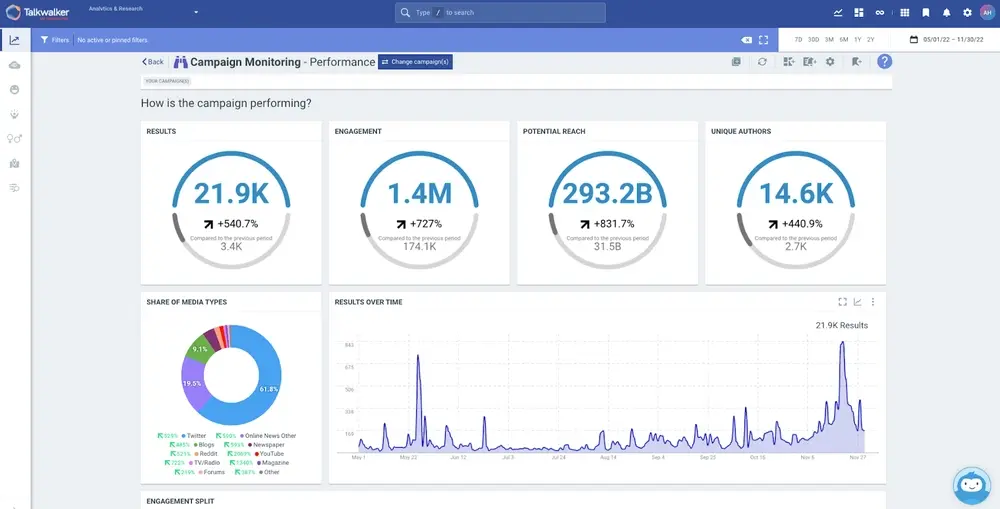
Talkwalker connects social performance to business results by tracking how your social media activities impact website traffic, sales, and brand health.
This way, you won’t need to spend hours—or hire a team of data scientists—trying to determine whether your social content drives conversions.
Key features:
Real-time brand monitoring and alerts
Competitive social media analysis
Visual content analysis
Cross-platform analytics dashboards
Automated social media trend detection
Custom reporting options
Hootsuite
Best for: All-in-one social media management and scheduling
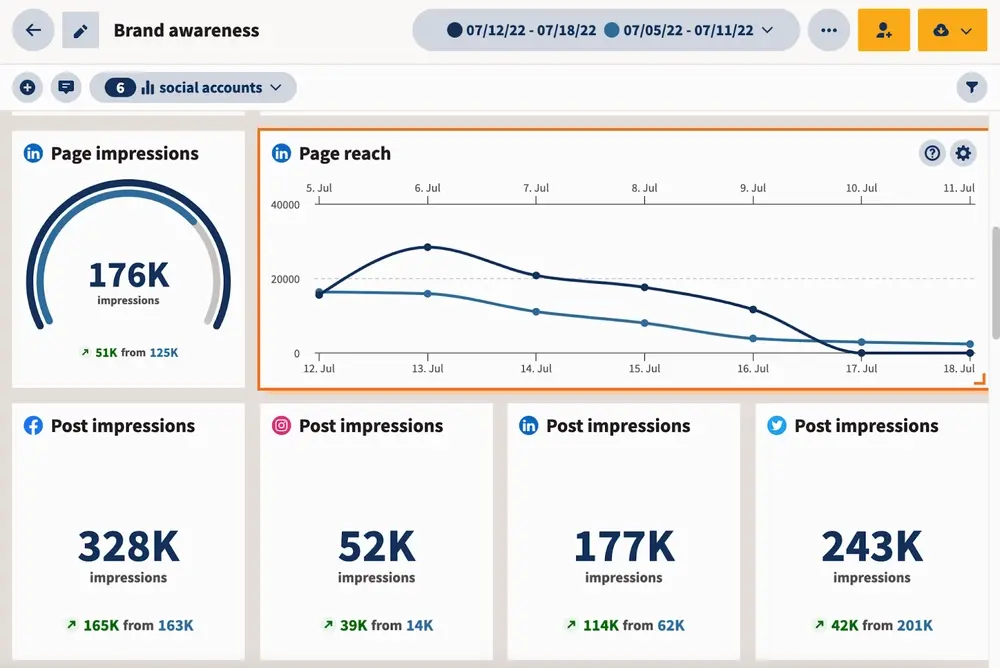
Hootsuite provides a unified dashboard to track your social media performance in real time. It offers a combination of analytics and content management features like content scheduling.
You can use this tool to track engagement metrics, analyze post performance, understand audience demographics, and implement benchmarking
connects your digital marketing efforts to actual business outcomes.
While not primarily a social media measurement tool, it reveals important patterns in how social media audiences engage with your content.
First, the platform analyzes visitor behavior based on traffic sources, showing which posts and campaigns drive meaningful actions.
Second, it lets you measure how social visitors move through your sales funnel using custom events and conversion metrics.
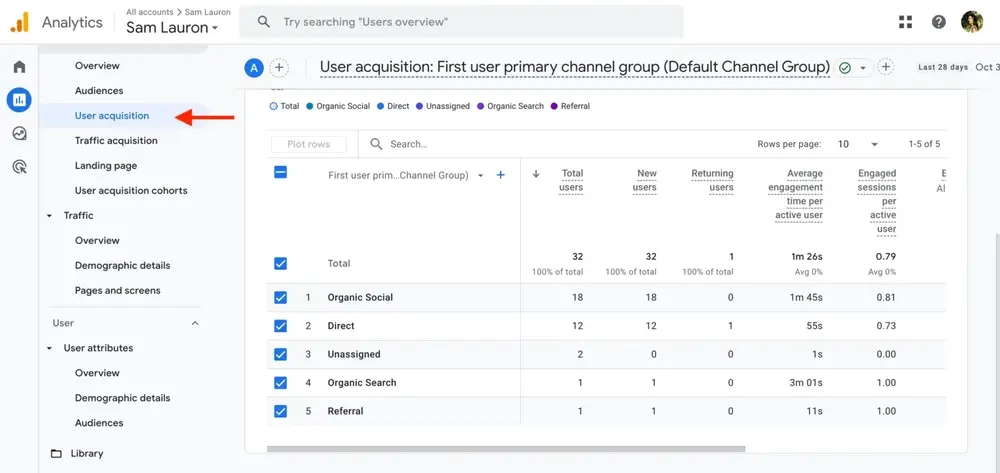
Analytics tools like Talkwalker let you integrate data from your GA4 account with social performance metrics. This way, you get a complete view without having to create multiple complex reports.
Key features:
Traffic source reports to see which social platforms send the most engaged visitors
Social campaign tracking through UTM parameters
Advanced segmentation by social media source
Event tracking for specific user actions like purchases
Custom funnel analysis for social visitors
Audiense
Best for: In-depth social media audience analysis
Audiense helps you analyze and segment your social media followers. Unlike generic analytics tools, it focuses specifically on who your social audience is and how they behave.
The platform provides rich insights about your followers' interests, behaviors, and preferences.
It also analyzes conversation patterns and social media engagement to reveal what motivates your audience and influences their decisions.
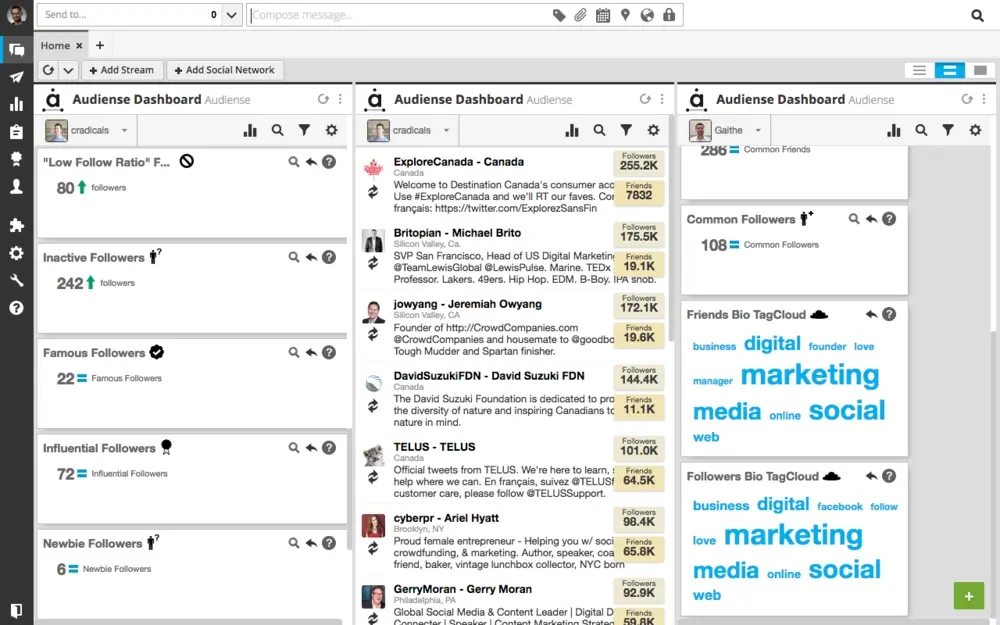
All this helps you create targeted social media content and campaigns that attract and convert the right customer profiles.
Key features:
Audience segmentation by interests and behavior
Topic and conversation analysis
Follower network analysis and insights
Community trend monitoring
Campaign audience targeting tools
FAQs
Finally, let’s address some of the most common questions about social media measurement.
What are the social media metrics?
Social media metrics are data points that show how your content performs on social platforms. They usually fall into several key categories:
Awareness metrics like reach, impressions, and share of voice
Engagement metrics such as likes, comments, and shares
Traffic metrics including clicks and website visits
Conversion metrics like leads or sales from social channels
Business metrics such as social media ROI and cost per result
What is a social media measurement tool?
A social media measurement tool helps track and analyze performance across social networks. These platforms collect data about your social media content and audience and turn it into actionable insights. Various tools offer different features, such as:
Cross-platform performance tracking
Advanced reporting capabilities
Automated data collection
Competitive analysis features
Custom metric calculations
How often should you measure social media performance?
Different metrics need different monitoring schedules.
For example, you might track post engagement and reach daily, review campaign performance weekly, and analyze deeper metrics like ROI and audience growth monthly.
What's important is establishing a process that works for your needs and following it consistently.
Measure and improve your social media performance
Social media measurement requires strategic planning and the right tools, but it's worth the effort.
It helps you prove the value of your social media content and find ways to achieve better results—from boosting individual post performance to increasing social media ROI.
Here's what you need to make it work:
Analytics tools to track performance across platforms
Clear goals and matching metrics for each level
Regular monitoring and data quality checks
Documented processes to turn insights into action
Ready to take your social media measurement to the next level? Try Talkwalker's social media analytics platform with a free demo.
Or see a social-driven success story in action, as we take a look at how one NBA team is winning fans by connecting on social media.
Download the NBA customer success story